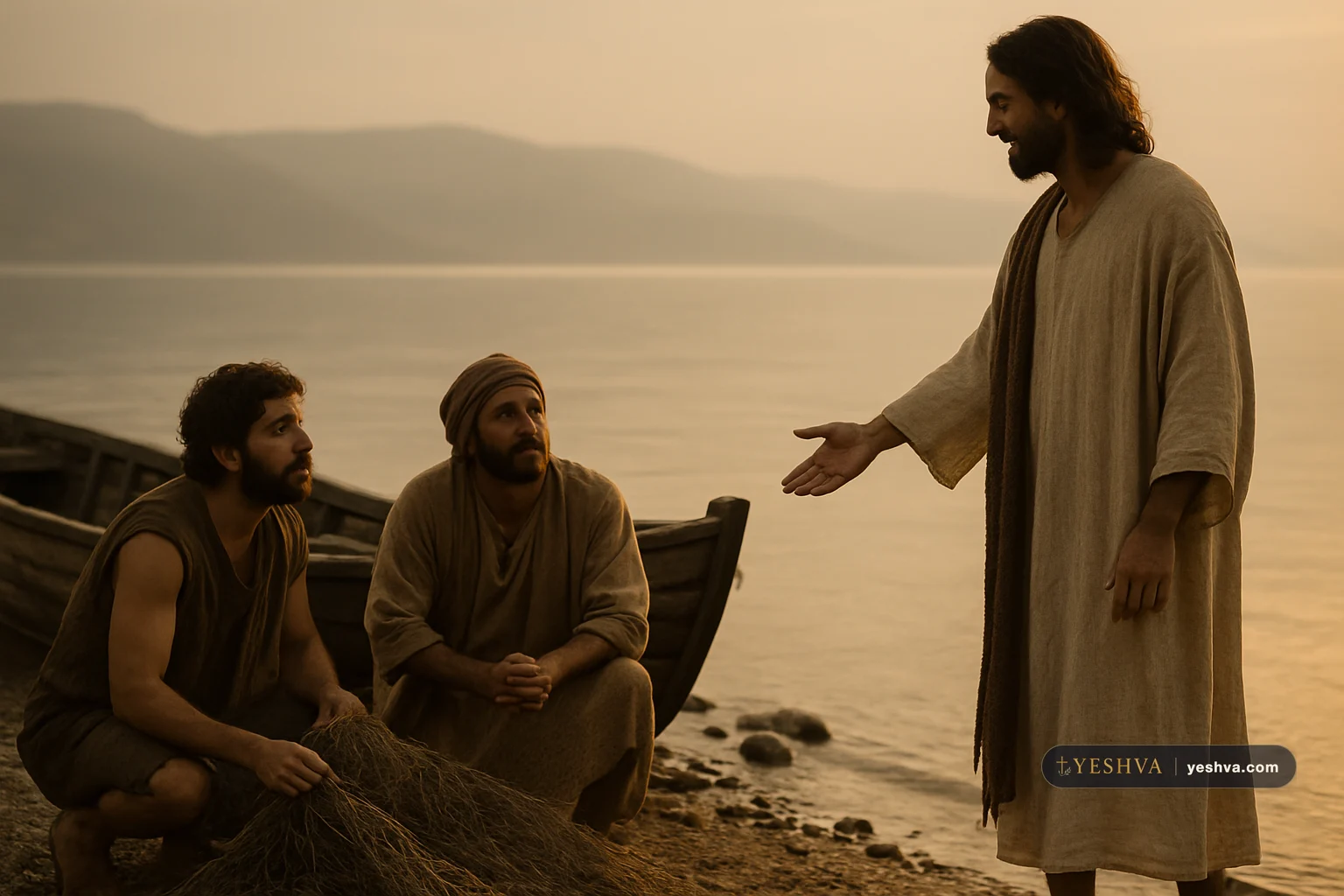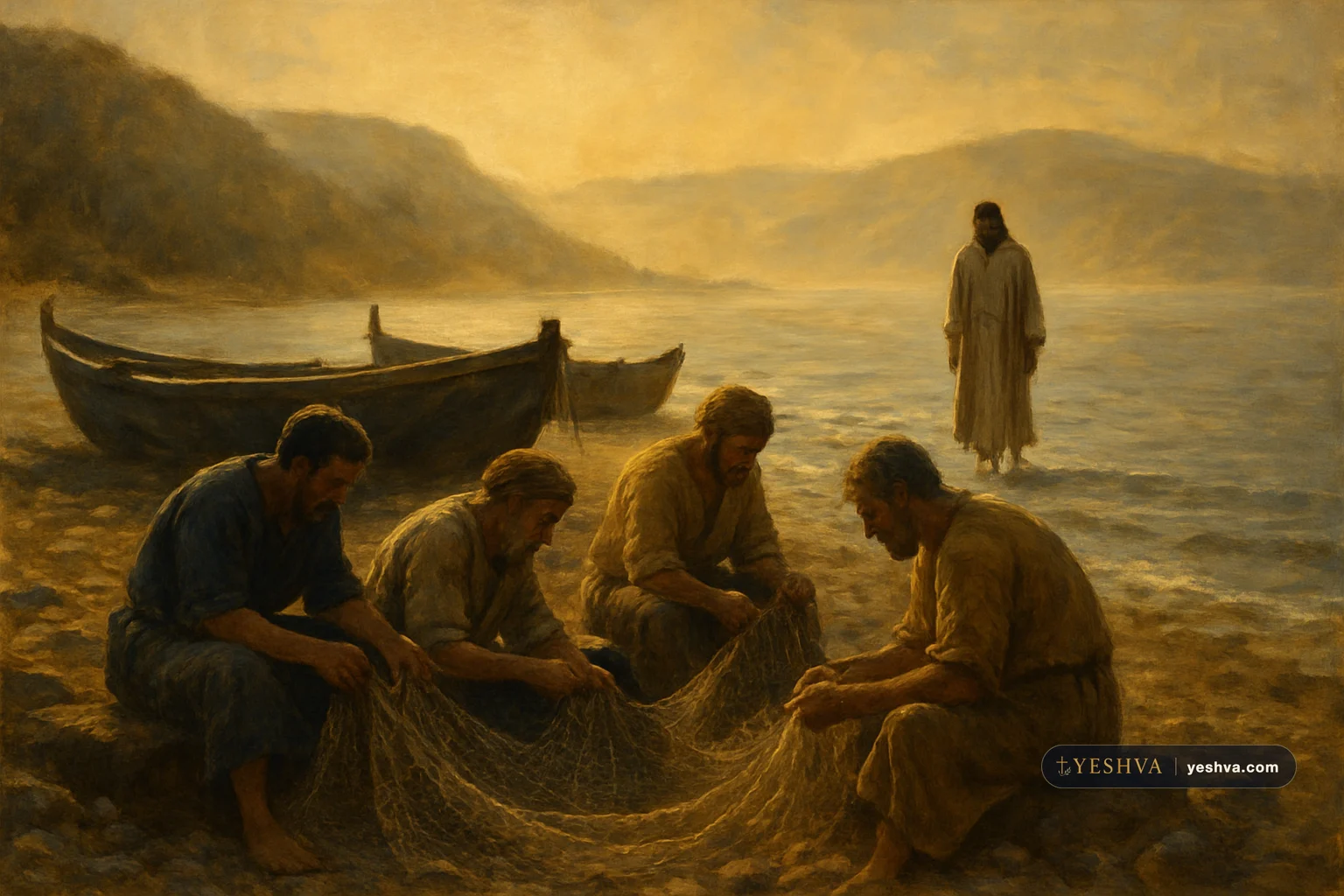
Jesus could have chosen scholars, priests or people with influence. Instead, early in his public life, he picked twelve men that most of their neighbors would have overlooked: fishermen, a tax collector and a handful of others the Gospels barely describe. Here is who they were, why there were twelve, and why the Gospels never polish them up.
Why twelve?
Luke says Jesus spent a night in prayer before choosing them (Luke 6:12). Mark says he appointed twelve so that they would be with him and be sent out to preach (Mark 3:13). The number recalls the twelve tribes of Israel, and many scholars and Christians see it as a sign that Jesus was beginning a renewed people of God. The word “disciple” means a learner, someone who follows a teacher closely. The word “apostle” means one who is sent. The Gospels use both for the twelve.
Jesus had other followers too, including many women who supported his work and traveled with him (Luke 8:1), and a larger group of seventy (seventy-two in some ancient manuscripts) who were sent out on a mission (Luke 10:1). The Twelve were an inner circle, not the only ones.
The twelve names
The four lists in the New Testament agree on almost every name, though the order varies slightly (Matthew 10:2, Mark 3:16, Luke 6:14, Acts 1:13).
- Simon Peter, a fisherman from Capernaum, always named first. Jesus gave him the nickname Peter, meaning “rock.”
- Andrew, Peter’s brother, who had first followed John the Baptist (John 1:35).
- James and John, brothers and fishermen, sons of Zebedee. Jesus nicknamed them “sons of thunder.”
- Philip, from Bethsaida, who brought his friend Nathanael to meet Jesus (John 1:43).
- Bartholomew, often thought to be the same person as Nathanael.
- Matthew, also called Levi, a tax collector (Matthew 9:9).
- Thomas, known as the Twin, remembered for his doubts (John 20:24).
- James, son of Alphaeus.
- Thaddaeus, called Judas son of James in Luke’s lists.
- Simon the Zealot. The nickname may mean he was zealous for God's law, or that he had ties to those who wanted Roman rule overthrown.
- Judas Iscariot, who later betrayed Jesus.
Ordinary people
What stands out is how ordinary they were. At least four were fishermen who left their nets to follow Jesus (Matthew 4:18). Matthew collected taxes and tolls for the ruling powers, which made him unpopular with his own people. If Simon's nickname means what many think, it put him at the opposite political extreme, and a tax collector and a zealot ended up sharing the same road and the same meals. They were not religious professionals or wealthy scholars. Peter and John were later described as ordinary, uneducated men, and observers were amazed at their courage (Acts 4:13).
Jesus’ invitation to them was simple: come and follow me. For most it meant leaving work and home to live on the road, learning by watching and listening.
Not perfect heroes
The Gospels do not hide the disciples’ weaknesses. They argued over who was the greatest (Luke 9:46, Mark 10:35). They misunderstood Jesus again and again, and he sometimes had to be patient with them (Mark 8:14). When he was arrested, most of them ran away (Mark 14:50). Peter, who had promised loyalty, denied knowing him three times (Matthew 26:69). Thomas wanted proof before believing in the resurrection.
This honesty is one reason many readers find the accounts believable. If the writers were inventing heroes, they would have flattered them. Instead the story shows people who were slow to understand and quick to fear, yet who were loved and forgiven.
Judas and Matthias
Judas Iscariot betrayed Jesus to the authorities for money (Matthew 26:14, Matthew 27:3). The accounts of his death differ in their details, and Christians have long discussed how they fit together. After the resurrection, the remaining eleven chose Matthias to take Judas’s place, so that the group would again be twelve (Acts 1:21). Many Christians also count Paul as an apostle, though he was not one of the Twelve and met Jesus later (Acts 9:1).
Restoration
The story of Peter is especially moving. After the resurrection, Jesus met him by the lake and asked him three times if he loved him, giving him three chances to answer for the three denials, and then gave him a new task (John 21:15). The message Christians take is that failure is not the end of the story.
What happened to them?
The New Testament records that James, son of Zebedee, was put to death by King Herod Agrippa, the only one of the Twelve besides Judas whose death the New Testament records (Acts 12:1). For the rest, the Bible says little, and what we know comes from later church traditions of varying reliability. Tradition says Peter was executed in Rome, Thomas traveled as far as India, and John lived to old age. Historians take some of these traditions more seriously than others, and Christians differ on how much weight to give them. What is well documented is that the early church spread rapidly across the Roman world from a small group in Jerusalem.
What they were sent to do
After his resurrection Jesus sent them to make disciples of all nations and teach them what they had learned (Matthew 28:19). The book of Acts tells how ordinary people, with all their flaws, began telling the story of Jesus in city after city (Acts 2:1). Christians today see themselves as part of the same story, and Jesus’ invitation to follow him is not limited to the twelve.
If you would like to meet them, the Gospel of Mark is a short and vivid place to start. The next pages look at what Jesus did and taught with them beside him.