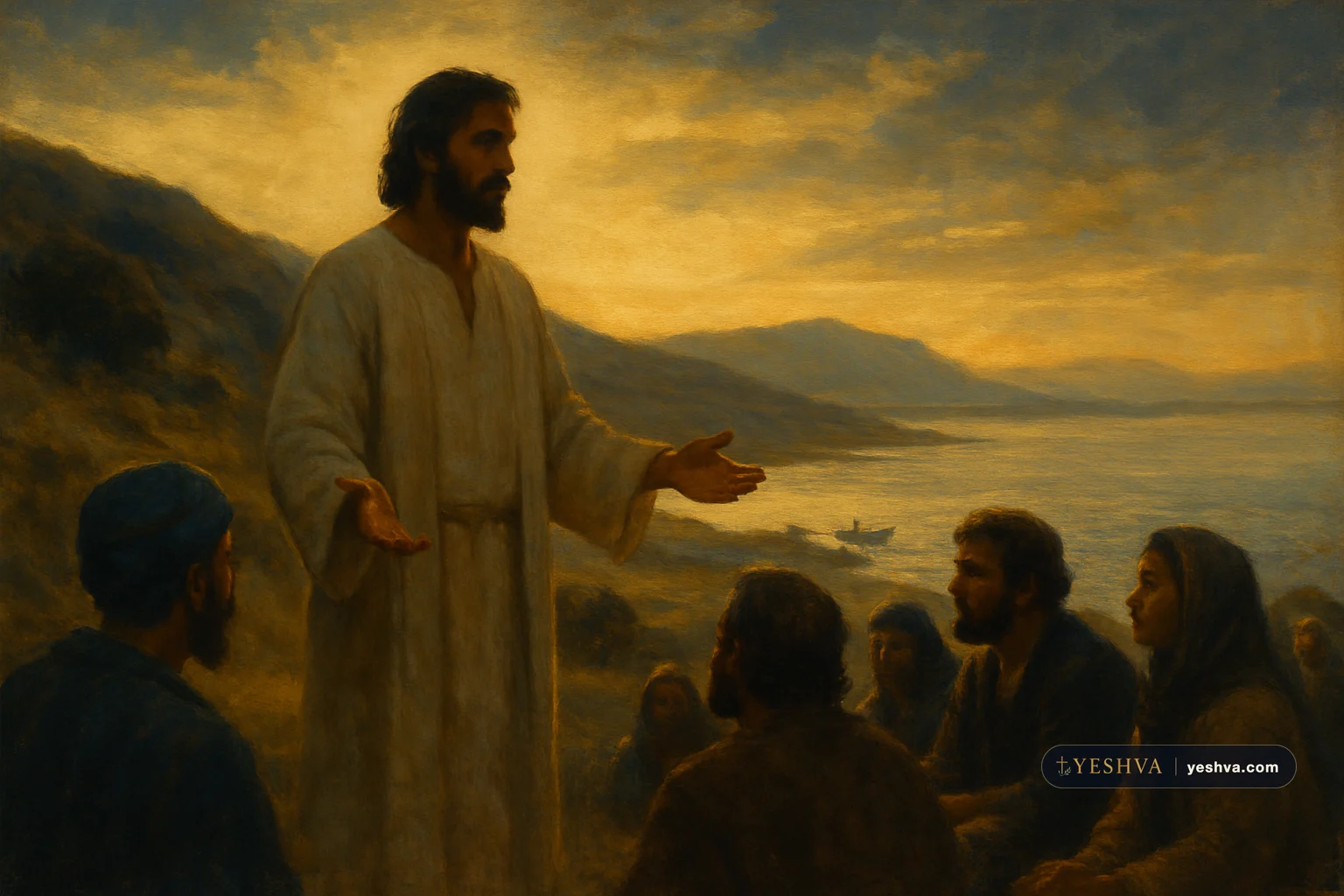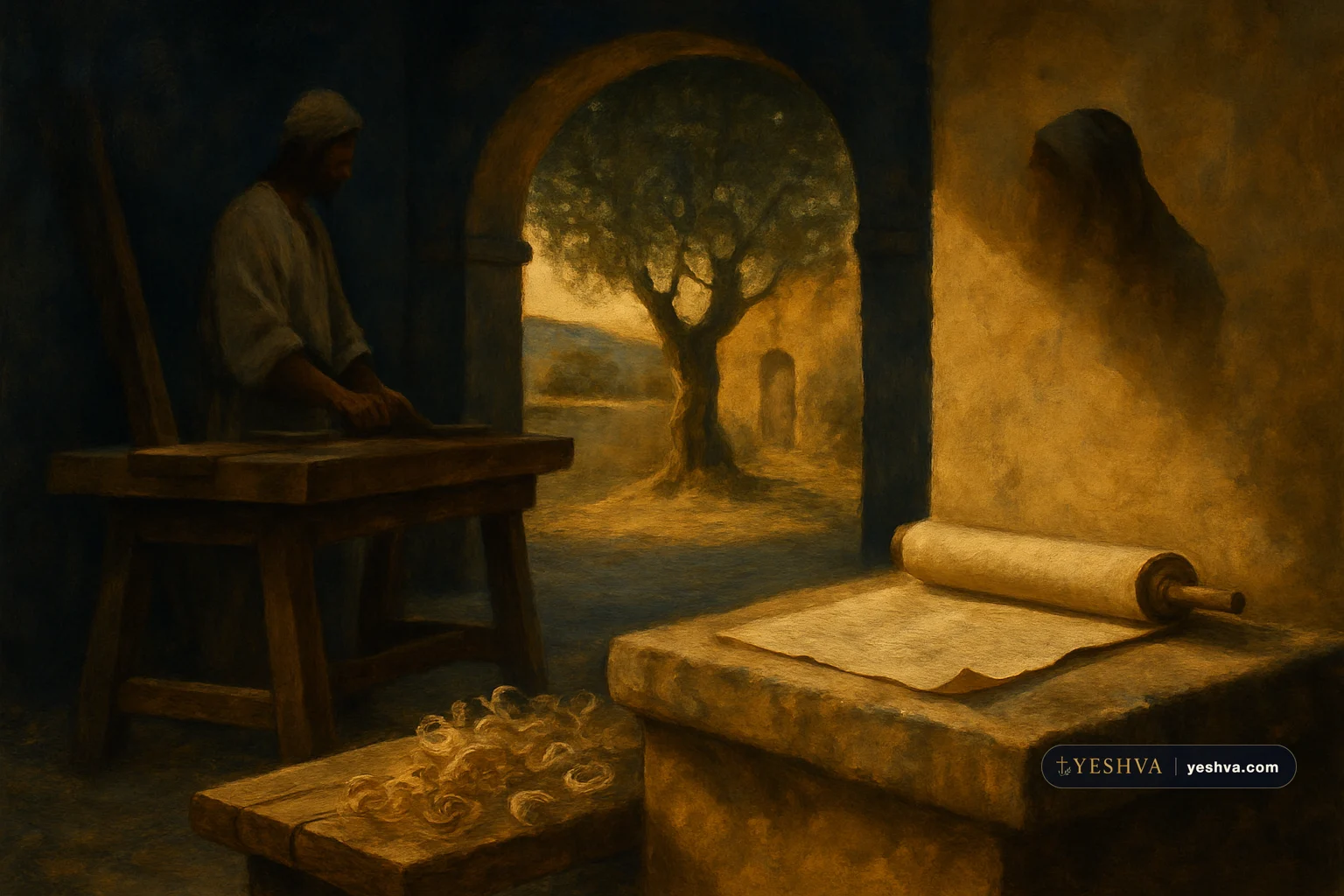
Yeshua is the name his mother would have called across the courtyard in Nazareth. It is also, in a slightly different spelling, the name of this website. Here is where it comes from, what it means, and why it still matters.
Jesus in his own language
Jesus was a Jewish man living in first-century Israel, so his mother and friends would not have called him “Jesus.” In everyday speech they used a Hebrew and Aramaic name, most often written today as Yeshua. Some spell it Yeshu’a or Yehoshua in its longer form.
The name Jesus is what happens when Yeshua travels through languages. It was written in Greek as Iesous, which is how the New Testament records it. From Greek it passed into Latin, then into English as Jesus and into Spanish as Jesús. Each step changed the sound a little, but it is the same name, much like Juan, John and Jean are all one name.
What the name means
Yeshua comes from Yehoshua, a name built from God’s own name and a word for salvation or rescue. The meaning is usually given as “the Lord saves” or “the Lord is salvation.” It was also an ordinary name. In the most thorough count of Jewish names from this period, Tal Ilan's Lexicon of Jewish Names in Late Antiquity, it ranks around sixth among men's names, behind Simon, Joseph and a few others. Several other men called Yeshua appear in the writings of the Jewish historian Josephus.
That also connects Jesus to a figure from the Hebrew Bible. The English name Joshua is the same name. Joshua led the Israelites into the promised land after Moses, and his story is told in the book of Joshua 1:1. One late book of the Hebrew Bible even calls him by the short form, Yeshua son of Nun Nehemiah 8:17, and the Greek New Testament uses the same word, Iēsous, for both men, which is why a few verses about Joshua read "Jesus" in older English Bibles Hebrews 4:8. The parallel is not accidental for Christians: one Yehoshua brought God’s people into a land, and another Yeshua opens the way into God’s family.
The name given before he was born
The Gospels say the name was not chosen at random. In Matthew’s account, Joseph is told in a dream to give the child this name, and the reason is spelled out: he will rescue his people from their sins Matthew 1:21. The whole scene is in Matthew 1:18. Luke tells a parallel story in which Mary receives the same instruction, in Luke 1:26.
For those who follow him, the name is a compact statement of his mission. It does not say “the one who teaches” or “the one who conquers.” It says “God saves.” Christians read the rest of the story as the unfolding of that name.
Yeshua and Christ
You will often hear Yeshua paired with a second word, Mashiach, or in Greek, Christos. Both mean the anointed one, the Messiah. In ancient Israel, kings and priests were anointed with oil to mark them for a task, and the prophets spoke of a coming anointed king who would set things right. You can see hints of this hope in Isaiah 9:6 and Psalms 2:1.
When Peter says Jesus is the Christ in Matthew 16:13, he is not using a last name. He is saying that this is the promised one. So “Yeshua HaMashiach” means “Jesus the Messiah,” the way Messianic Jewish believers commonly refer to him today.
Why the name Yeshua is used today
Many Christians simply say Jesus, and that is completely fine. Every language has its own form of the name, and God is not more pleased by one spelling than another. Some believers, including Messianic Jewish communities, prefer Yeshua because it reminds them that Jesus was Jewish and that the faith grew out of Israel’s story. Others use it because they find it beautiful.
There is no rule about this. What matters to most Christians is the person, not the pronunciation. Whether spoken in Hebrew, Spanish, Swahili or English, the name refers to the same Jesus.
Names carried meaning
In the ancient world, a name was often a statement of hope, and many Hebrew names, like this one, had God's name built into them. Parents chose names that spoke of what they wished for their child, or of who they trusted. So a boy named Yeshua was, in a small way, a prayer said out loud every time someone called him home for dinner. The Gospels suggest that in this case, the prayer became a life.
A small takeaway
If you remember one thing, let it be this: the name Jesus, at its root, is a promise. It says that help is not something we have to build for ourselves. That is the good news the Gospels announce, and you can keep exploring it at your own pace. A natural next step is asking how we know Jesus really existed, and then who he claimed to be.