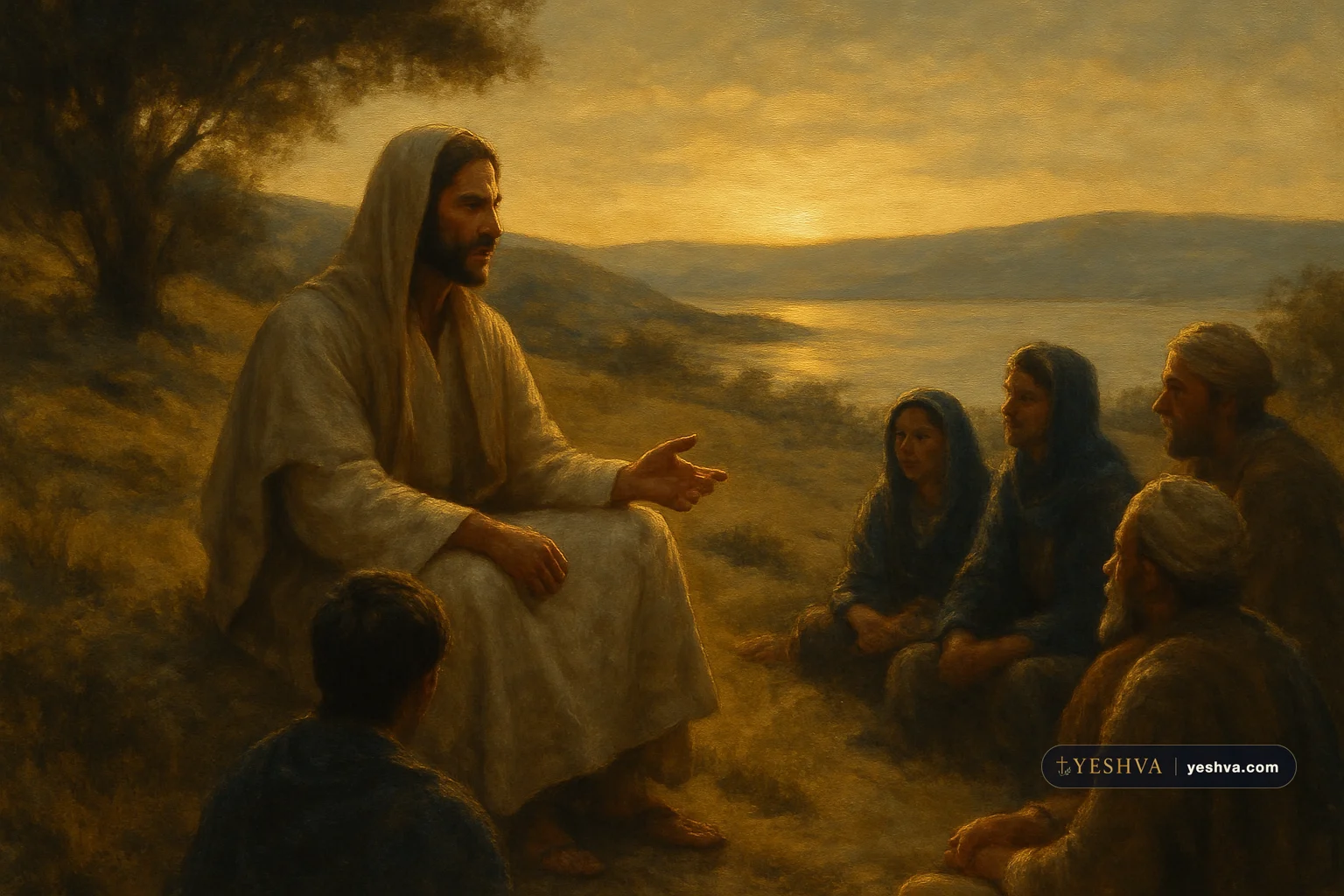
In churches around the world, Christians recite the Nicene Creed, a summary of faith from the fourth century, which says that for our sake Jesus was crucified under Pontius Pilate. That short line holds both halves of the question. "Under Pontius Pilate" is history, a Roman governor and a real execution. "For our sake" is faith, the conviction that this death was for others. Here are both, one at a time.
What happened
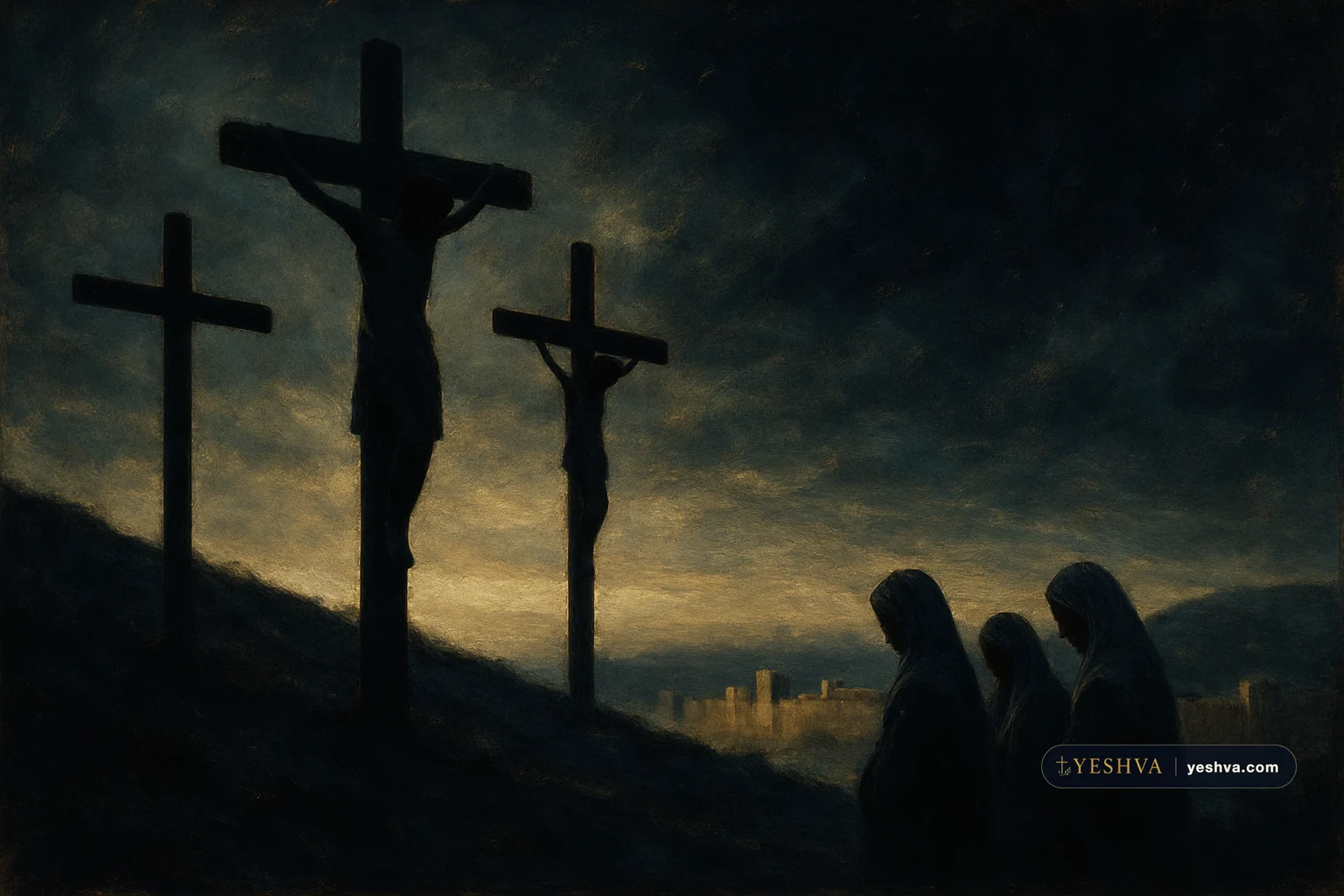
According to the Gospels, Jesus was arrested at night after sharing a last meal with his disciples. He was questioned by Jewish leaders in Jerusalem and then brought to the Roman governor, Pontius Pilate, who condemned him to crucifixion. He died on a cross outside the city on a Friday, probably in the years around AD 30 to 33 (scholars debate the exact year). You can read the accounts in Mark 15:1, with further details in Luke 23:32 and John 19:28.
Crucifixion was a Roman punishment, slow and public, used mainly for rebels, slaves and those the empire wanted to make an example of. The Gospels say Jesus was charged with claiming to be a king, which Pilate took as a threat to Roman order.
What do historians say?
The crucifixion of Jesus is among the most secure facts about him. The Roman historian Tacitus, writing about eighty years later, mentions that Christ was executed under Pontius Pilate in the reign of Tiberius. The Jewish historian Josephus, writing in the 90s, also refers to it in a passage that scholars discuss carefully because later Christian copyists added to it, though many think it keeps an authentic core. Even critics of Christianity generally accept the execution as historical.
Why did people want him dead?
The Gospels describe a mix of reasons. Some religious leaders saw Jesus as a threat: he challenged how they exercised authority, and he was said to claim a unique closeness to God. Others feared that the crowds gathering around him might provoke Rome. Pilate himself, in the accounts, seems reluctant but gives way under pressure (John 19:12).
It matters to say that this story has sometimes been misused to blame Jewish people as a whole. That is a serious historical and moral error. Jesus and all of his first followers were Jewish, the leaders involved were a small group, and Roman authorities carried out the sentence. Christians today widely reject any such blame; the Catholic Church said so formally at the Second Vatican Council in 1965, and Protestant and Orthodox bodies have said the same.
Did Jesus expect to die?
Yes, the Gospels say he did. He spoke of his coming suffering more than once and described his life as being given for others (Mark 10:45). At his last supper he shared bread and wine with his friends and spoke of a new covenant sealed by his death (Luke 22:19). In this account he was not a victim caught by surprise but someone who walked toward Jerusalem knowing the cost.
What do Christians believe it accomplished?
This is the heart of the matter. The New Testament says, in various ways, that Jesus died for us. It says the death was an act of love while we were still far from God (Romans 5:6). It says he carried our sins (1 Peter 2:24) and that through him people are reconciled to God (2 Corinthians 5:18). The first Christians also saw Jesus in the prophet Isaiah's picture of a servant who suffers for the wrongs of others (Isaiah 53:4), and John's Gospel roots the whole story in God's love for the world (John 3:16).
The New Testament uses many images because no single one is enough: a ransom, a sacrifice, a victory, a healing, a picture of love. Over the centuries Christians have put weight on different ones.
- Ransom and victory. Jesus rescues people from the powers of sin and death. This was especially emphasized by many early Christian writers.
- Sacrifice and substitution. Jesus takes on himself what our wrongdoing deserves, so that we can be forgiven. This is prominent in much of the Western church, especially in Protestant traditions.
- Example and love. Jesus' willing death reveals God's love so powerfully that it moves people to love in return.
The church has never chosen one of these as the only official explanation. What the creeds affirm is that he was crucified for us, and Christians across traditions can say that together while holding their favorite pictures a bit differently.
Why does it matter?
For Christians, the cross says two things at once. It says that sin and evil are serious enough that they cost something. And it says that God cares enough to take the cost upon himself rather than leave us alone with it. The cross is a place where suffering, injustice and mercy all meet.
Many people also find comfort in a quieter truth: whatever you are facing, God is not far away from suffering. In Jesus, he entered it. If you are carrying pain, guilt or grief, it is worth talking to a pastor, a trusted friend or a counselor as well; you do not have to carry it alone.
Not the end of the story
Christians do not remember Jesus only as one who died. They believe that on the third day, his tomb was empty and he was alive. Good Friday makes sense to them only because of Easter Sunday. That is the subject of the next page.