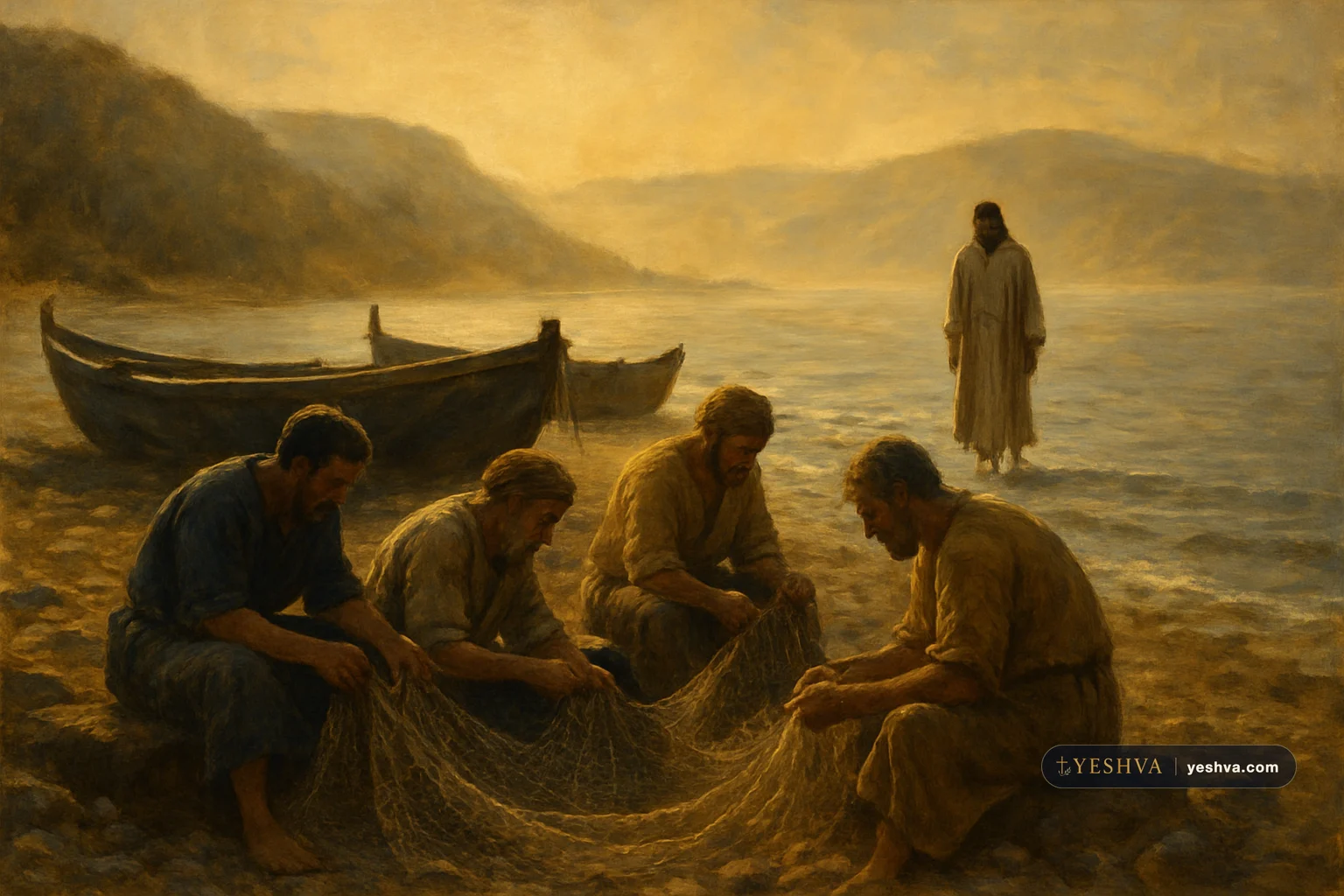
Few things about Jesus are as historically secure as this: a prophet named John baptized him in the Jordan River. The Jewish historian Josephus, writing around AD 94, remembers John as a good man who called people to live rightly and baptized them, until Herod Antipas, afraid of his influence, had him killed at the fortress of Machaerus. Scholars of nearly every outlook, believers and skeptics alike, place Jesus' baptism beside his crucifixion as close to certain, partly because it raised an awkward question no early Christian would have invented: if Jesus never sinned, why did he line up for a baptism meant for people turning away from wrongdoing? The Gospels felt that question too, and their answer says a great deal about who Jesus is.
John at the Jordan
Before Jesus was widely known, a prophet-like figure called John was drawing crowds to the Jordan River, in the wilderness east of Jerusalem. People remember him as John the Baptist. He lived simply, spoke bluntly, and urged everyone, from soldiers to tax collectors, to turn back to God and live honestly (Luke 3:7). As a sign of that turning, he immersed people in the river.
John also told the crowds that he was only preparing the way. Someone greater was coming after him, he said, someone whose sandals he did not feel worthy to untie (Mark 1:4). The Gospels connect John's mission with the old promise in Isaiah of a voice in the desert clearing a road for the Lord (Isaiah 40:3, Matthew 3:1).
Jesus steps into the water
Jesus, then about thirty years old, came down from Galilee and asked John to baptize him (Luke 3:21). Matthew records that John tried to refuse. In John's eyes it should have been the other way around: he was the one who needed Jesus. Jesus answered that it was right for them to do this, as part of fulfilling everything God asked, and John agreed (Matthew 3:13).
That short exchange tells us the first readers felt the tension as well. The Gospel writers do not hide it. They simply show that Jesus chose this, gently and on purpose.
The heavens open
Matthew, Mark and Luke describe what happened next in similar terms. As Jesus came up out of the water, the Spirit of God came down on him in a form like a dove, and a voice from heaven spoke of him as the beloved Son in whom the Father delights (Mark 1:9, Matthew 3:16). The Gospel of John tells it through the Baptist's own testimony: he says he saw the Spirit come down and remain on Jesus, and that this was how he recognized who Jesus was (John 1:29).
Christians have long noticed that this is one of the clearest moments in the Bible where Father, Son and Holy Spirit appear together: the Son in the river, the Spirit descending, the Father's voice from above. Later believers would put that into words with the teaching of the Trinity, but the scene itself is simple and quiet.
So why was he baptized?
The Gospels do not give a single tidy answer, and Christians through the centuries have pointed to several reasons that fit together.
He stood with the people he came to save. John's baptism was for people admitting their need. By joining them, Jesus did not confess sins of his own; he placed himself alongside sinners, in the same line, in the same muddy water. Many Christians see here an early picture of what he would do at the cross, taking the place of others.
He began his public work. The baptism works like a commissioning. Right after it, the Gospels say the Spirit led Jesus into the wilderness to be tested, and then he started preaching in Galilee (Mark 1:12). Later, Peter summed up Jesus' ministry by saying God anointed him with the Holy Spirit and power (Acts 10:37).
He was shown to the world. The voice from heaven echoes language from the Psalms and Isaiah about God's chosen king and servant (Psalms 2:7, Isaiah 42:1). Before Jesus healed anyone or taught a single parable, the Father declared who he was and that he was loved.
He set an example. Jesus later sent his followers out to baptize people from every nation (Matthew 28:19). When a Christian is baptized today, they are walking into water that Jesus walked into first.
Was Jesus' baptism the same as Christian baptism?
Not exactly. John's baptism was a sign of turning back to God in preparation for the one who was coming. Christian baptism, from the earliest days of the church, was done in the name of Jesus and linked with receiving the Holy Spirit (Acts 2:38, Acts 19:1). The apostle Paul describes it as being joined to Jesus' death and new life (Romans 6:3).
Christians practice baptism in different ways. Many churches baptize infants as a sign of God's promise to the family of faith; others baptize only those old enough to profess faith themselves. Some immerse, some pour, some sprinkle. They also understand what happens in baptism somewhat differently. These are real and long-standing differences, held by sincere believers, and almost all Christians agree that baptism matters because Jesus himself took part in it and asked his followers to continue it.
What it can mean for you
The baptism of Jesus is often read as a story about identity. Before he had done any public work, he heard that he was the Father's beloved Son. Christians believe that those who come to God through Jesus are welcomed in a similar way: not loved because of their record, but received as children (Romans 8:15).
If you are curious, the accounts are short. You can read Mark 1:1 in a few minutes and then compare it with Matthew 3:13 and Luke 3:21 to see how each writer tells it.