


YESHVA Articles
Articles
Long-form reads for the Christian life, in English and Spanish.
Latest

The Emperor's Letter That Dates the Apostle Paul
Neither Acts nor Paul's letters mention a single calendar year. So how do we know when Paul was in Corinth? The answer lies in a few broken stones at Delphi, carved with a letter from Claudius about a town that needed more citizens.

The Credit-Card-Sized Scrap of John in Manchester
In a library in northern England lies a scrap of papyrus you could cover with your palm. It carries a few Greek lines from the trial of Jesus, and for ninety years it has been at the center of the question of how early the Gospels were copied and how far they had already traveled.
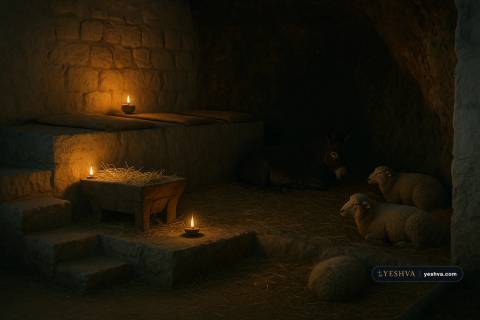
No Innkeeper, No Barn: The Bethlehem House Behind Luke 2
The Christmas pageant has an innkeeper and a stable, but Luke's account has neither. A single Greek word, and the layout of an ordinary village house, paint a warmer and more surprising picture of the night Jesus was born.

Lydia, the Dealer in Purple, and the First Church in Philippi
A businesswoman from Thyatira, far from home, sat by a river in Philippi and heard Paul. What she did next put the first European church in her living room.

Tertius Held the Pen: How Paul's Letters Were Written and Delivered
The average letter in Paul's world ran under a hundred words. Romans runs to about 7,100. Behind every one of Paul's letters stood a secretary, a team of coworkers, a costly roll of papyrus and a trusted friend who carried it across the sea.
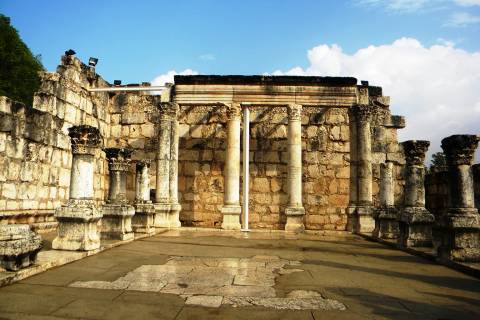
Capernaum: The Black-Stone Village Where Jesus Made His Home
Franciscan archaeologists spent nearly twenty years digging out the village where Jesus taught, healed and stayed. The black stone houses they found explain more of the Gospels than you might expect.
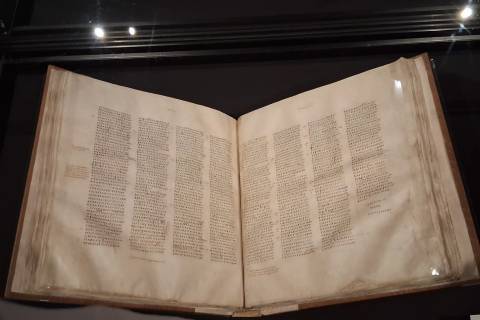
Codex Sinaiticus: The Fourth-Century Bible Split Between Sinai, London, Leipzig and St Petersburg
In Christmas week of 1933, some 20,000 people queued at the British Museum to see a Greek Bible copied by hand sixteen centuries earlier. How it left a monastery below Mount Sinai is still disputed. What it shows about the Bible's text is not, and it explains some footnotes in your Bible.

The Men Who Judged Jesus Left Their Names in Stone
For centuries Pontius Pilate and the high priest Caiaphas were known almost only from texts. Then a block in a Roman theater and a bone box found by a bulldozer put both names back in the hands of archaeologists.