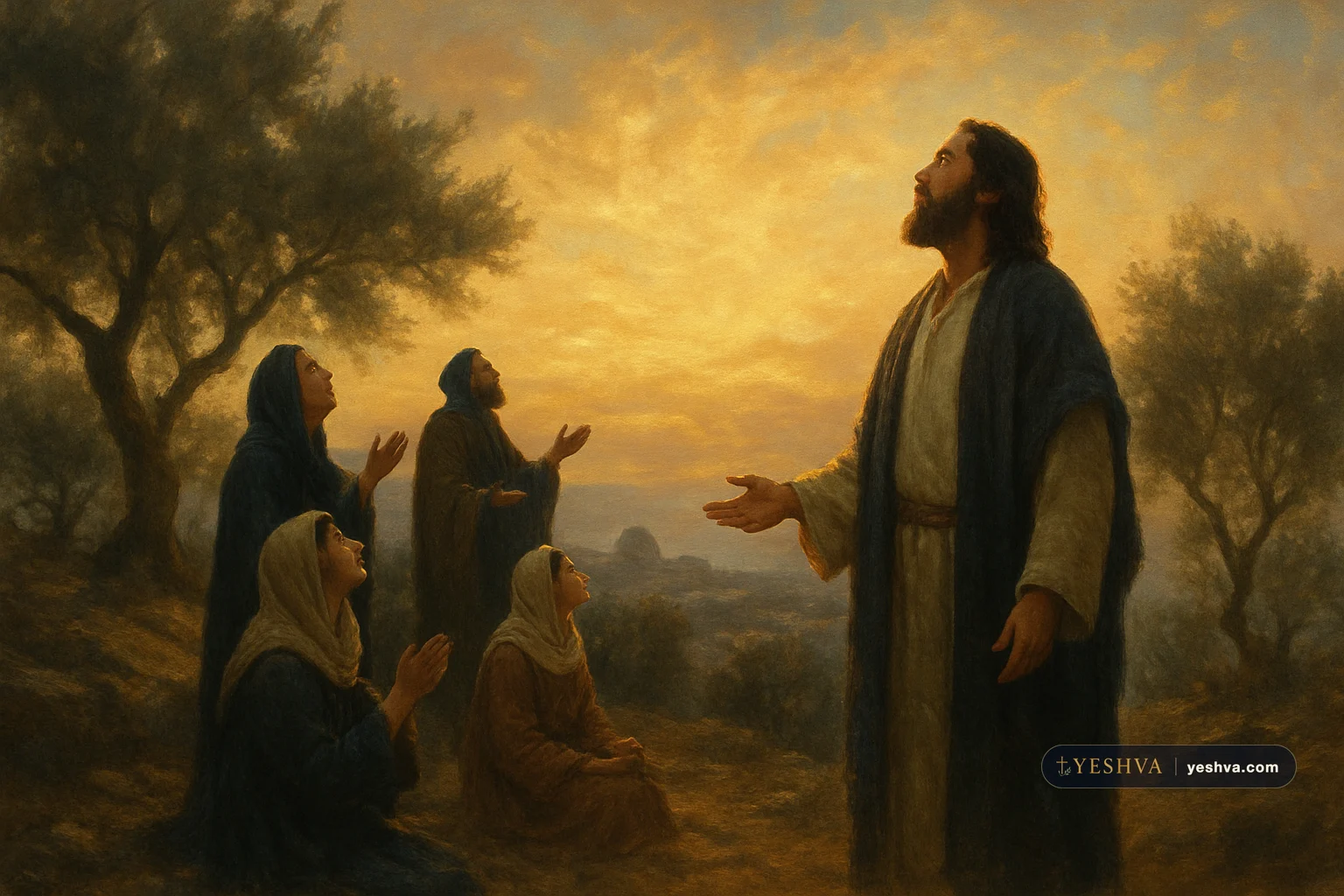
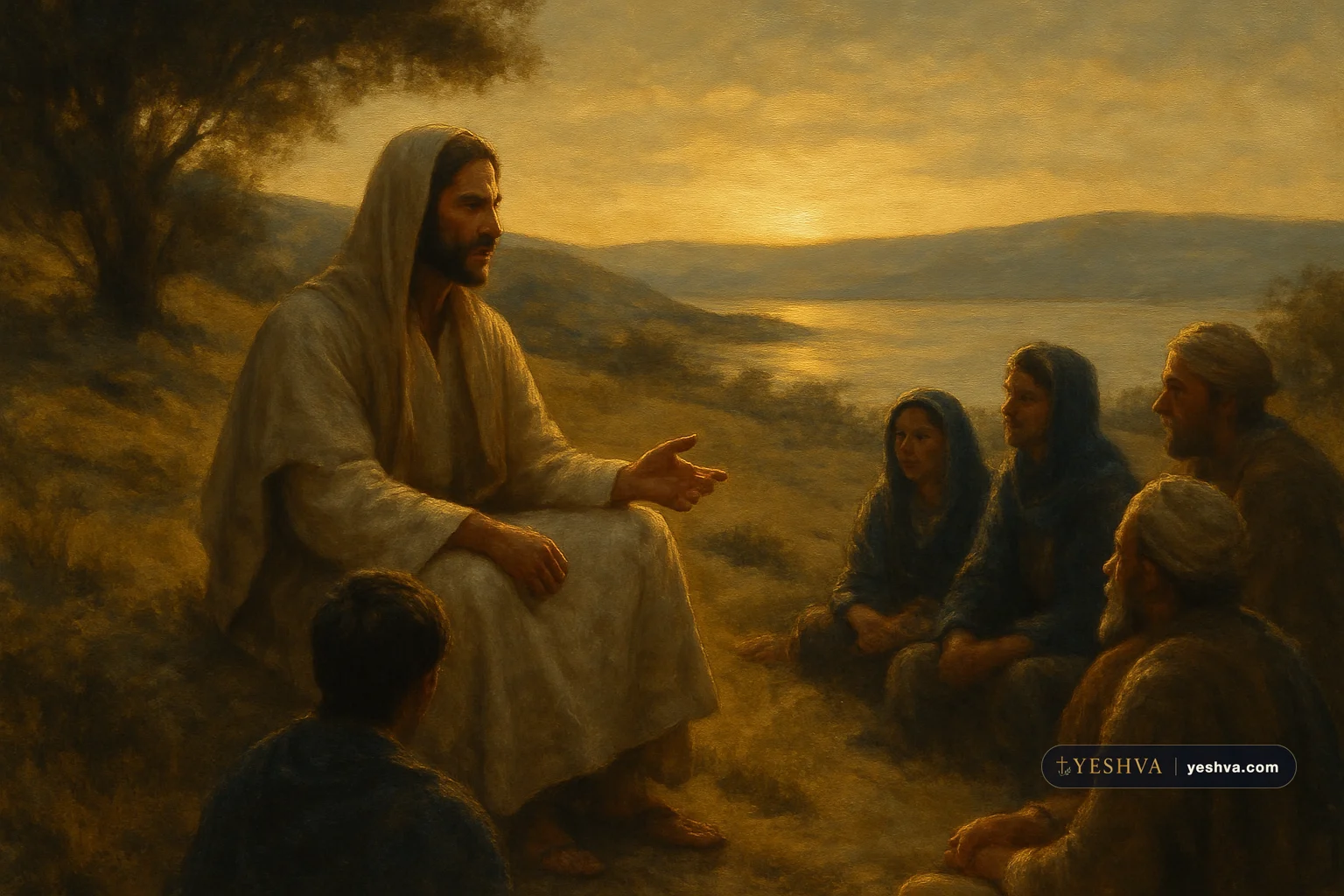
In all four Gospels, Jesus uses the word paradise exactly once. He says it on the cross, to a dying criminal who has asked only to be remembered (Luke 23:39). The word came into Greek from Persian, where it meant a walled garden. That moment says a lot about how he talked about heaven: with quiet confidence and surprising warmth, more interested in whom we will be with than in what the place looks like.
What "heaven" means
In the Gospels, heaven is first of all where God is at home, the realm where his will is fully done. That is why Jesus taught his followers to pray that God's will be done on earth as it is in heaven (Matthew 6:9). Heaven is not far away from God's care for this world. It is the source of it.
Jesus also spoke of the "kingdom of heaven," meaning God's rule. Matthew prefers that phrase, in the reverent Jewish habit of speaking of heaven rather than naming God, while Mark and Luke say "kingdom of God"; they mean the same thing. He said it was already breaking into ordinary life through his own teaching and healing (Luke 17:20), and that it would one day come in full. So Christians tend to hold two ideas together: God's kingdom has begun, and it is not finished yet.
A home prepared for you
On the night before his death, Jesus comforted his friends, who were frightened and confused. He asked them to stop being afraid and to trust him, told them there was plenty of room in his Father's house, and promised he was going ahead to get a place ready and would come back to bring them there (John 14:1). The Greek word for those rooms, monai, comes from the verb for staying or abiding; a few verses later Jesus uses the same word when he says he and the Father will come and make their home with the one who loves him (John 14:23). Notice the picture. It is a house, a family home, and he is the one who makes it ready. Nothing in the promise depends on being impressive.
Welcome for the humble
Jesus was blunt that heaven is not earned by status or performance. He told people to receive God's kingdom the way a small child does, with open hands rather than a résumé (Mark 10:13). He said the poor in spirit, those who know they need God, are the ones who belong to it (Matthew 5:3). And he told a story about a rich man who ignored a beggar at his gate, showing that how we treat others matters and that God sees what the world overlooks (Luke 16:19).
Some of his listeners were the very people religious society had written off, and the criminal on the cross is the extreme case: no time left, nothing to offer, and a promise of being with Jesus that same day. It is one of the clearest pictures in the Gospels of how open the door is.
Joy, not gloom
Jesus often used feasts and celebrations to describe what is coming. He said people will come from east and west to sit at table in God's kingdom (Matthew 8:11), and he told of a great banquet where the invitation goes out far and wide (Luke 14:15). He said there is joy in heaven when even one person turns back to God (Luke 15:7). Heaven, in his teaching, sounds less like a waiting room and more like a party after a long journey.
What is not there
The book of Revelation, the last book of the Bible, describes God making all things new: he wipes away every tear, and death, mourning and pain are no more (Revelation 21:1). Christians read this as the fulfillment of what Jesus promised. Suffering that seems endless now is not the last word.
Jesus also said that in the resurrection people will not be given in marriage, but will be like the angels of God (Matthew 22:29). Christians understand this in different ways. Most take it to mean that our present relationships are not lost, but that life there is so full that earthly categories no longer limit it.
What Jesus did not explain
There are questions Jesus did not answer in detail: what heaven looks like, what we will do, how time works. Christians differ on some of these. Some emphasize going to be with Christ after death, and others emphasize a renewed earth and bodily resurrection at the end, and many hold both. What nearly all agree on is the center of the promise: being with Jesus and with God, at home, forever.
He was also sober about the other side. He warned that not everyone who calls him Lord is walking with him (Matthew 7:21), and he spoke of a real separation from God. Christians disagree about how to understand these passages, and it is honest to say the subject is heavy. But he spoke of it as someone who did not want anyone to miss the invitation, which is why he came in the first place (John 3:16).
Who gets in?
Jesus said something startling in John's Gospel: that eternal life means knowing the Father and the one he sent (John 17:3). Heaven, then, is not mainly about a location or an escape. It is about relationship, which begins now. He promised that whoever believes in him has eternal life, and that no one who comes to him will be turned away (John 6:35).
That is why Christians say heaven is a gift rather than a prize. You do not have to be good enough. You are invited to trust the one who prepared the place.
If you're wondering
Many people ask about a loved one who has died. The Bible does not give a full answer for every case, and Christians are gentle here rather than certain about others. What they can say is that God is more loving and just than we are, and that we can leave those we love in his hands (Genesis 18:25).
If you want to explore this more slowly, the reading plan linked below walks through what the Bible says about heaven and hope. And if the idea of being welcomed at all stirs something in you, that is a good place to begin talking to God. Jesus promised that whoever asks, receives (Matthew 7:7).