The exact phrase "Lamb of God" appears only twice in the Bible, spoken by the same man on two days in a row beside the Jordan River (John 1:29, John 1:36). Yet the idea behind it runs from the first book of the Bible to the last, and churches have sung it before Communion for well over a thousand years. Why would anyone call a grown man, a teacher and healer, a lamb? Follow the thread and much of the story of Jesus comes into focus.
The day John pointed him out
John the Baptist was a desert preacher who urged people to turn back to God. When he saw Jesus walking toward him, he told the crowd that here was God's own lamb, the one who would carry away the sin of the whole world (John 1:29). The next day he said it again, and two of his own disciples left him and followed Jesus (John 1:35).
John's listeners were Jewish, and that short phrase would have called up centuries of their history.
A lamb God provides
In Genesis, God tests Abraham by asking him to offer his son Isaac. Climbing the mountain, Isaac notices they have wood and fire but no animal, and asks about it. Abraham tells him God will see to the lamb (Genesis 22:7). At the last moment God stops Abraham, and a ram caught by its horns in a thicket is offered in the boy's place (Genesis 22:12). Israel never forgot the lesson: the substitute comes from God.
The Passover lamb
The most important background is the Passover. While Israel was enslaved in Egypt, God told each household to choose a year-old male animal without defect, from the sheep or the goats, slaughter it at twilight and put its blood on the doorframe (Exodus 12:3). That night judgment fell on Egypt, but the houses marked with blood were passed over (Exodus 12:12), and Israel left slavery behind.
Jewish families have kept that night ever since. In Jesus' day pilgrims poured into Jerusalem for the feast, and the lambs were slaughtered at the temple on the afternoon before the meal. The historian Josephus, writing later in the first century, gives a count for one Passover in the hundreds of thousands; historians suspect he inflated it, but the scale was clearly enormous.
Lambs and forgiveness
Lambs also stood at the center of Israel's regular worship. Two were offered at the temple every day, one in the morning and one at dusk (Exodus 29:38), and a lamb could be brought as an offering for sin (Leviticus 4:32). These rituals taught that wrongdoing is serious: it damages our bond with God and with each other, and forgiveness is never cheap. The New Testament letter to the Hebrews adds that such sacrifices, repeated year after year, could never remove sin for good (Hebrews 10:1).
The prophet Isaiah pointed further. He described a servant of God who suffers for the wrongs of others, is wounded so that they can be made whole, and goes to his death without a word of protest, like a lamb led away (Isaiah 53:5). Early Christians saw Jesus in that servant. When an Ethiopian court official traveling home was puzzling over this very passage, Philip, one of the early church's leaders, started there and told him about Jesus (Acts 8:32).
Jesus at Passover
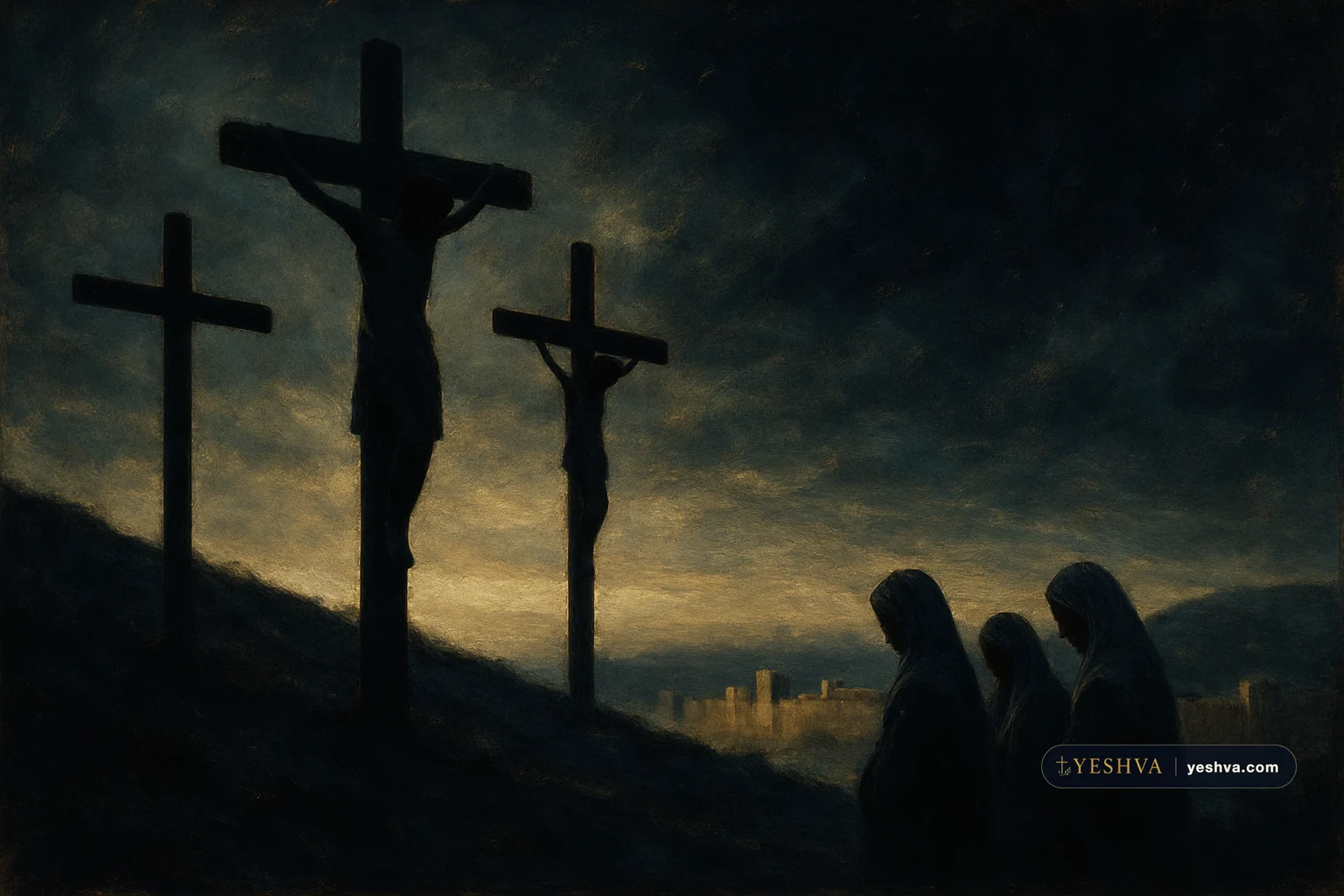
Jesus died during the Passover festival. Mark sets his last supper on the day the Passover lambs were sacrificed (Mark 14:12). At that meal Jesus took bread and a cup, familiar parts of the feast, and gave them new meaning: the bread was his body, and the cup his blood, which would seal a covenant and be shed for many (Mark 14:22). Christians still keep that meal in Communion, also called the Lord's Supper or the Eucharist.
John's Gospel tells the timing a little differently. It places Jesus' sentencing around noon on the day of preparation for the Passover (John 19:14), the day the lambs were being slaughtered, so that in John, Jesus dies as the Passover lambs die. Matthew, Mark and Luke present the supper itself as the Passover meal. Scholars have discussed this for centuries: some think John shaped his account to bring out the symbolism, others that Jesus held his Passover meal a day early, or that groups in Jerusalem followed different calendars. Either way, every Gospel ties his death to Passover. John also notes that none of Jesus' bones were broken, which recalls the rule for the Passover lamb (John 19:36, Exodus 12:46, Numbers 9:12). Paul put it plainly: Christ is our Passover lamb, already sacrificed (1 Corinthians 5:7).
What the title means
Taken together, calling Jesus the Lamb of God says several things at once. He is the one God himself provides, as Abraham trusted. He is the Passover lamb whose death leads people out of slavery, this time not to Pharaoh but to sin and death. He is the innocent servant who carries the wrongs of others, as Isaiah foresaw. And unlike the temple lambs, his sacrifice never needs repeating; the New Testament says it was offered once for all (Hebrews 10:10). Peter reminded early believers that their freedom was bought not with silver or gold but with Christ's own life, given like that of a flawless lamb (1 Peter 1:18).
Christians explain how this works in different ways. Some emphasize Jesus bearing the penalty for sin in our place; others his victory over evil and death, or the way his self-giving love heals and reconciles. Most see these as facets of one mystery rather than rivals, and all begin with the same conviction: Jesus laid down his life willingly, out of love (John 10:17).
The Lamb who reigns
The title does not end at the cross. In the Bible's last book, John is told that the Lion of the tribe of Judah has won the victory, and when he turns to look, he sees a Lamb standing, still marked as one who had been slain (Revelation 5:5). People from every tribe, language and nation sing his praise (Revelation 5:9), and the book goes on to call Jesus the Lamb nearly thirty times. The Lamb, it promises, will shepherd his people and lead them to springs of living water, and God will wipe away every tear (Revelation 7:17).
That is the surprise at the heart of Christianity: God's power shows itself not in a lion that crushes its enemies but in a lamb who gives his life and rises again. If your own wrongs ever feel too heavy to carry, this is the picture Christians hope you will hold on to. Someone has already carried them, and you are welcome to come as you are.