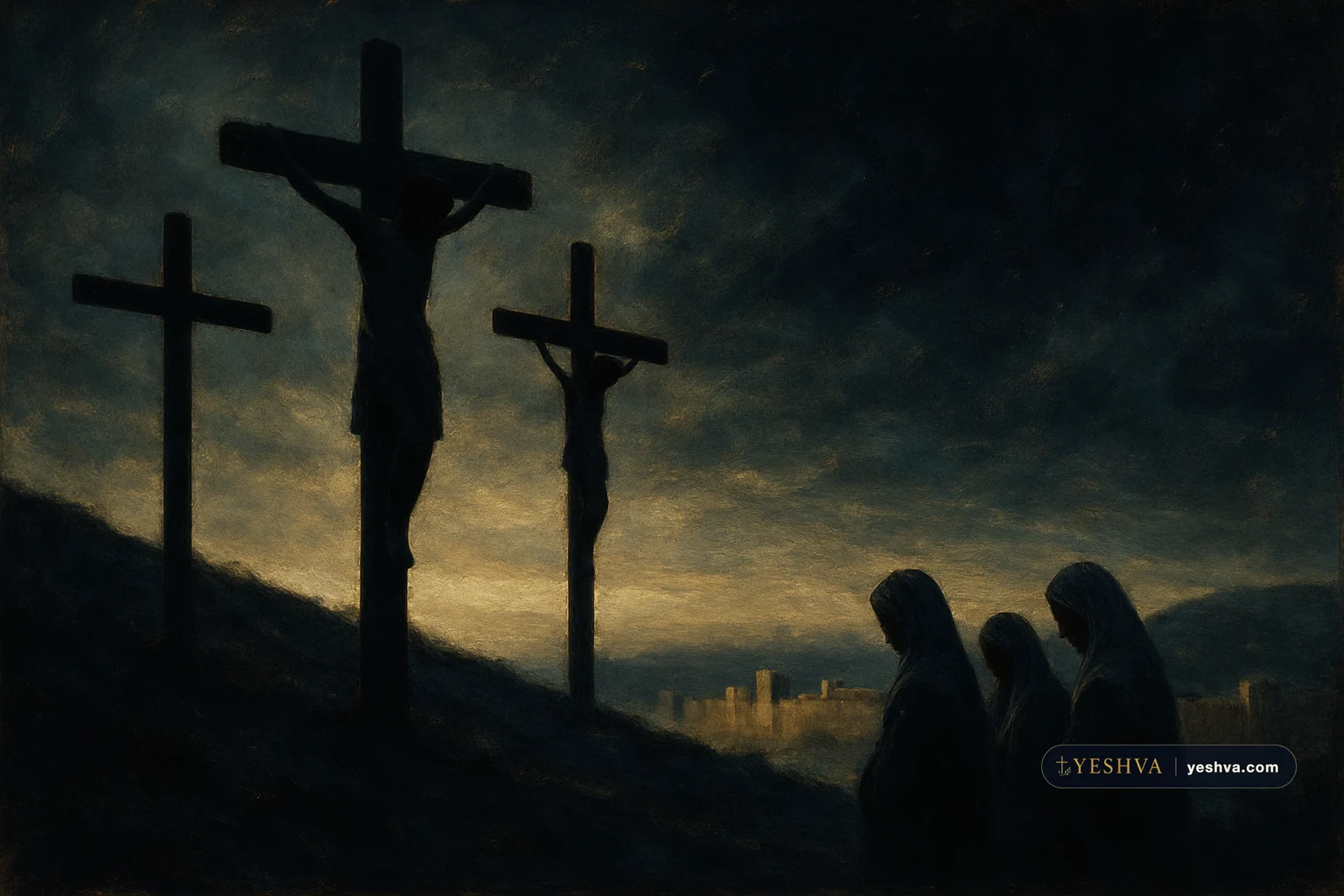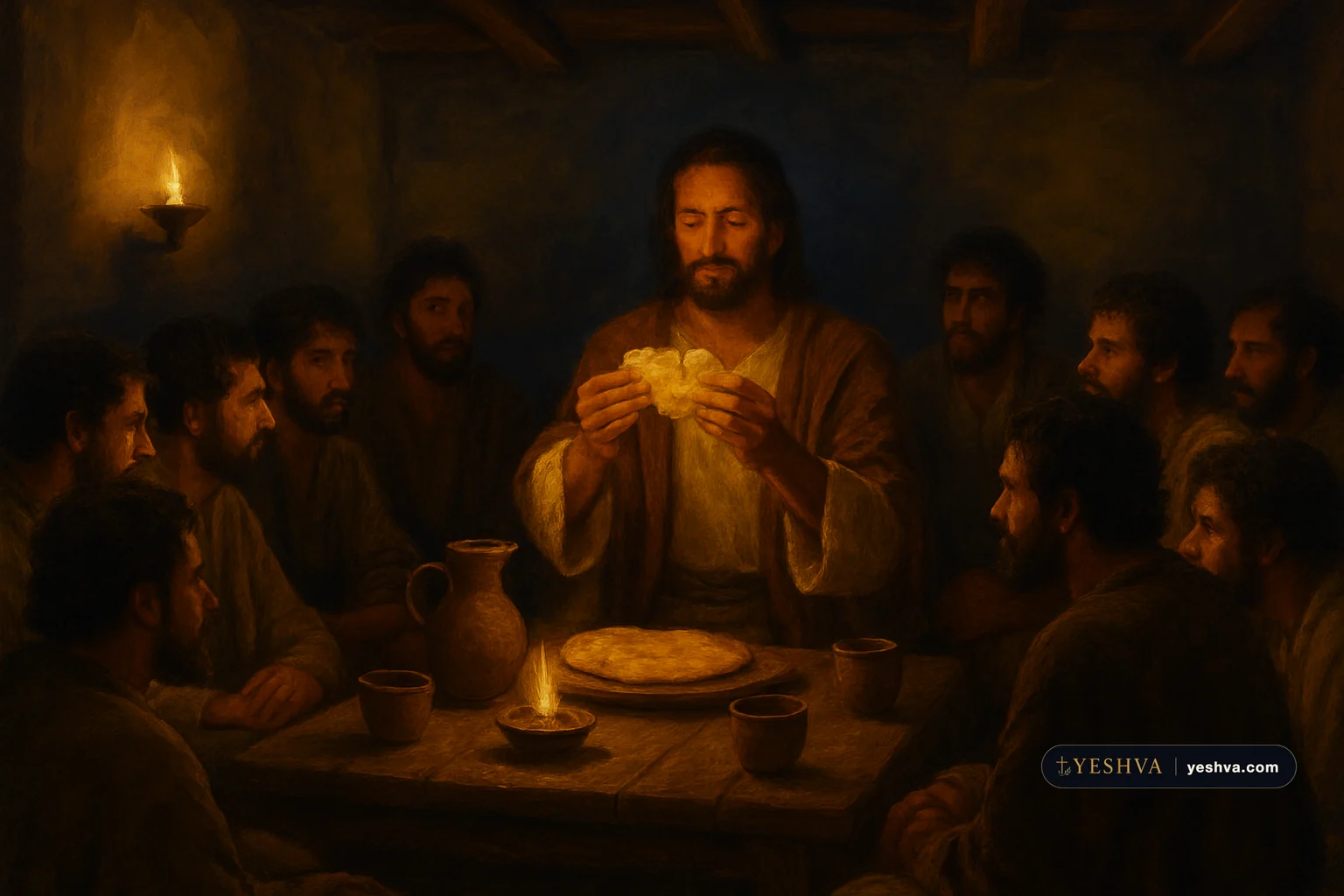
The oldest written account of the Last Supper is not in the Gospels. It is in a letter Paul sent to the church in Corinth in the mid-50s AD, about twenty-five years after the event and probably before any Gospel was written. Paul says he is handing on something he himself received: what Jesus did with bread and a cup on the night he was handed over (1 Corinthians 11:23). Within a generation, in other words, this meal was already the center of Christian worship, and churches around the world still repeat it every week.
A Passover week in Jerusalem
Jesus and his disciples had come to Jerusalem for Passover, the great spring festival when Jewish families remembered how God freed their ancestors from slavery in Egypt. At the heart of the first Passover was a lamb, its blood marking the doors of the homes that would be spared, and a meal eaten quickly, with sandals on and staff in hand, ready to leave (Exodus 12:1). Every year since, families gathered to retell that story over bread, wine and a shared table.
Mark says Jesus sent two disciples ahead to find a large upstairs room, furnished and ready, where they prepared the meal (Mark 14:12). Matthew, Mark and Luke present it as a Passover meal (Luke 22:7). John's Gospel tells it differently: the morning after the supper, the priests still had not eaten the Passover (John 18:28), and the crucifixion falls on the day of preparation, when the lambs were being readied (John 19:14), which suggests the supper came a day earlier (John 13:1). Scholars have proposed several ways to fit the accounts together, such as different calendars in use at the time. Whichever way it is resolved, all four Gospels set that night in the shadow of Passover, and that is the key to understanding it.
Jesus washes their feet
John tells of something the others leave out. During the meal Jesus got up, tied a towel around his waist, and began washing his disciples' feet, a servant's job, never a teacher's (John 13:3). Peter refused at first; he could not accept his teacher washing his feet. Jesus told them that he had given them an example: they should serve one another the same way (John 13:12).
That same evening he gave them what he called a new command, to love one another as he had loved them (John 13:34). The meal is about more than ritual. It is about the kind of community his followers are meant to be.
Bread and cup
Then came the moment Christians remember most. Jesus took a loaf, thanked God for it, broke it and handed it around, saying that this was his body, given for them. Later he passed a cup of wine and spoke of it as his own blood, sealing a covenant and shed for many people so that their sins could be forgiven (Matthew 26:26, Mark 14:22, Luke 22:17).
His disciples would have heard echoes everywhere. Covenant blood recalled the moment at Mount Sinai when Moses sprinkled blood to seal God's covenant with Israel (Exodus 24:8). In Luke and in Paul, Jesus calls it the new covenant (Luke 22:20), which recalled Jeremiah's promise of a day when God would place his teaching deep inside his people and forgive them for good (Jeremiah 31:31). Jesus was telling them that his coming death would be the new Passover, the act by which God would set people free. This is why the New Testament calls him our Passover lamb (1 Corinthians 5:7).
He also asked them to keep doing this to remember him (Luke 22:19). The Greek word, anamnēsis, carries the sense of the Passover itself. The Mishnah, a Jewish law code compiled around AD 200, puts it this way at the Passover table: in every generation each person should see himself as if he personally had come out of Egypt. Remembering, in that sense, is more than recalling a fact; it means stepping into a saving event so that you share in it.
A shadow over the table
The supper was not peaceful from start to finish. Jesus told the group that one of them would betray him, and they were stunned, each asking whether it could be him (Mark 14:17). Judas Iscariot left into the night to hand him over (John 13:21). Jesus also warned Peter that before the rooster crowed he would deny knowing him three times (Luke 22:31).
Even so, Jesus did not send any of them away. He handed a piece of bread, dipped in the dish, to Judas himself (John 13:26), and shared the meal with friends who would fail him within hours. Many Christians find deep comfort in that: the meal was given to weak and frightened friends, not to heroes.
After they sang a hymn (probably from the Hallel, Psalms 113–118, traditionally sung at the end of the Passover meal), they walked out to the Mount of Olives, to the garden where Jesus would pray and be arrested (Matthew 26:30).
How Christians remember it today
The earliest churches kept this meal from the start, as Paul's letter shows. Acts describes the first believers devoting themselves to the breaking of bread (Acts 2:42).
Today it goes by different names: Communion, the Lord's Supper, the Eucharist (from the Greek for giving thanks), the Mass in the Catholic Church, the Divine Liturgy in the Orthodox churches. Christians share bread and wine, or grape juice in some churches, in many different ways.
They also understand it differently. Catholic and Orthodox Christians believe Christ is truly present in the bread and wine in a real and mysterious way. Lutherans also affirm his real presence, explained in their own terms. Reformed churches, following John Calvin, speak of a real spiritual presence received by faith; many Baptists and others, following the Swiss reformer Zwingli, see the meal mainly as a memorial and a proclamation of his death. These are serious, long-held convictions, and Christians have sometimes argued sharply over them. Yet nearly all agree on the heart of it: Jesus gave himself for us, he is with his people, and he will come again, which is why Paul says the meal proclaims the Lord's death until he comes.
What it can mean for you
The Last Supper shows Jesus facing his death not with panic but with a gift. He explained it ahead of time, in the simplest language there is, bread and wine at a shared table. If you are new to all this, you might read the account in Luke 22:7 and then the foot-washing in John 13:1. If you visit a church, it is fine to ask how they share Communion and whether guests are invited to take part; practices vary, and people will be glad to explain.