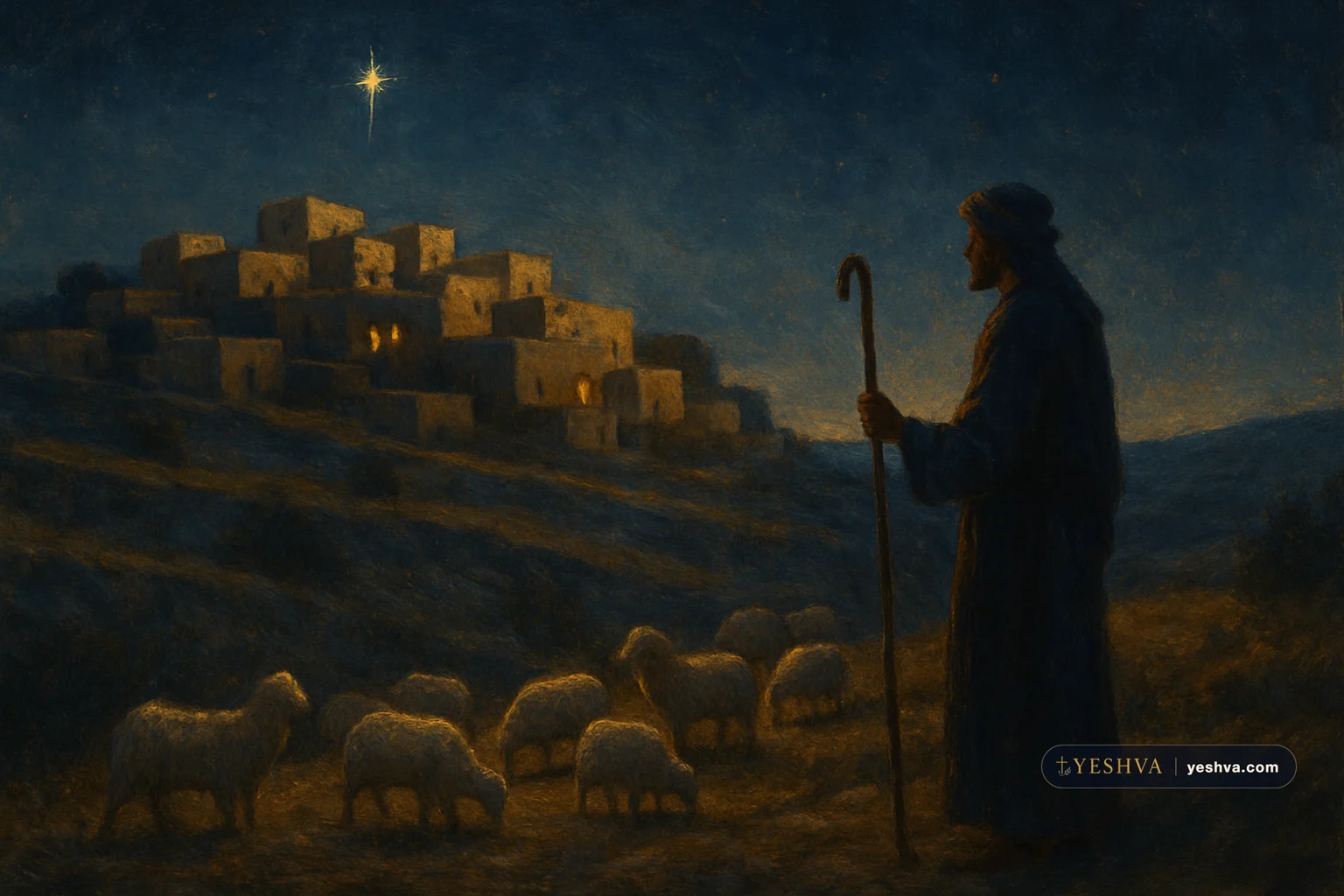
If God is greater than the universe, why would he ever become a baby in a feed trough? It is one of the strangest claims in any religion, and Christians have never pretended otherwise. The church has a word for it, the incarnation, which simply means “becoming flesh.” This page explains what Christians mean by it and why they think it matters.
What the claim actually is
The Gospel of John opens by speaking of the Word, who was with God and was God, and who then became flesh and lived among people (John 1:1, John 1:14). In the first centuries the church put it this way: Jesus is one person with two natures. He is fully God and fully human, not half of each, and not God pretending to have a body.
That second part was defended as fiercely as the first. Some early teachers said Jesus only seemed to have a body. Church leaders answered that this would rob the story of its point. A God who only appears to suffer has not really joined us in suffering.
To show us what God is like
Many people picture God as distant, distracted or angry. The New Testament says that in Jesus the invisible God became visible (Colossians 1:15, John 1:18). If you want to know how God treats the tired, the ashamed, the sick and the outsider, you watch how Jesus treats them. He touches lepers, eats with people no one respectable would sit with, and weeps at a friend’s grave (Mark 1:40, Luke 15:1, John 11:33).
The claim is that God’s character is not hidden behind rules or riddles. It walked around Galilee, got hungry, and answered questions.
To stand with us in everything human
Christians read that Jesus knew ordinary life from the inside. He was born into a poor family, worked with his hands, became tired, and was tempted (Luke 2:7, Mark 6:3, John 4:6, Hebrews 4:15). He also faced fear before his arrest and a terrible death (Luke 22:39).
The letter to the Hebrews says he shared in flesh and blood so that he could help people who are afraid of death, and could be a faithful, merciful high priest (Hebrews 2:14). For many believers this is the heart of the comfort. Whatever you are facing, the God Christians worship is not a stranger to pain.
To rescue us from the inside
The Bible describes humanity’s problem as deeper than bad habits. It speaks of sin, a brokenness that damages our relationship with God and with one another, and of death, which ends everything we love. Paul describes Jesus taking the place of Adam, the first human, as a new beginning for the human family (Romans 5:12).
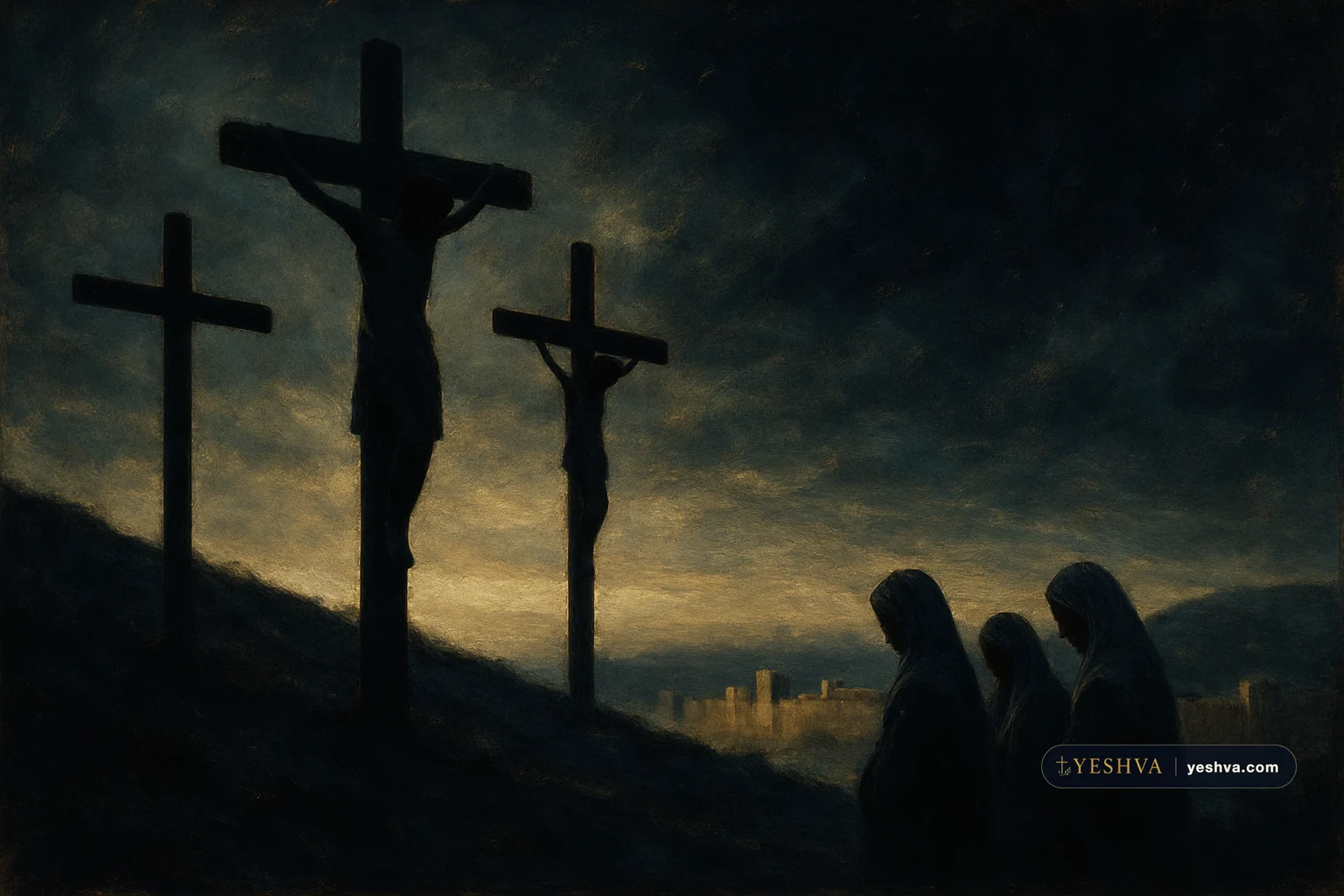
The idea is that only someone who is truly human could stand in for humanity, and only someone truly God could actually save. Jesus, the New Testament says, humbled himself, took the form of a servant and went all the way to a cross (Philippians 2:6). Christians explain why he died in more detail on the page “Why did Jesus die?” Here it is enough to say that becoming human was the first step of a rescue, not a detour.
The promises that came before
The birth of Jesus was not presented as a surprise. The Gospels point back to older hopes: a child whose name means “God with us” (Isaiah 7:14, Matthew 1:22), a ruler coming from Bethlehem (Micah 5:2), and a child called Mighty God and Prince of Peace (Isaiah 9:6). Paul says that when the time was right, God sent his Son, born of a woman (Galatians 4:4).
Matthew and Luke both say Mary was a virgin when Jesus was conceived by the Holy Spirit (Matthew 1:18, Luke 1:26). Most Christians throughout history have held this as part of the story. Some modern believers read it more symbolically, but almost all agree on the main point: Jesus’ coming was God’s own initiative.
A gift, not a demand
Notice the direction of the movement. In many religions people climb toward God through effort. The Christian claim is the reverse: God comes down. Paul says Jesus, though rich, became poor so that others could share his riches (2 Corinthians 8:9). The Gospel of John says God loved the world so much that he gave his Son (John 3:16).
You do not have to believe all of this today to see what is being said. It is an invitation, not a threat. It says that the God who made everything wanted to be near, and made himself small enough to be held.
Questions people often ask
Christians do not say this is easy to grasp. Thinkers across many traditions, Catholic, Orthodox and Protestant, have written for centuries and still call it a mystery. That does not mean it is meaningless. A mystery, in the Christian sense, is something true that is bigger than we can fully picture, like the vastness of space or the love of a parent.
If you are curious, a good next step is to read the story yourself, starting with Luke’s account of the birth (Luke 2:1) or the way John describes it. The pages after this one look at where Jesus was born, who he was with, and what he taught.